Best Intensive Green Sand Mixers for Your Casting Needs?
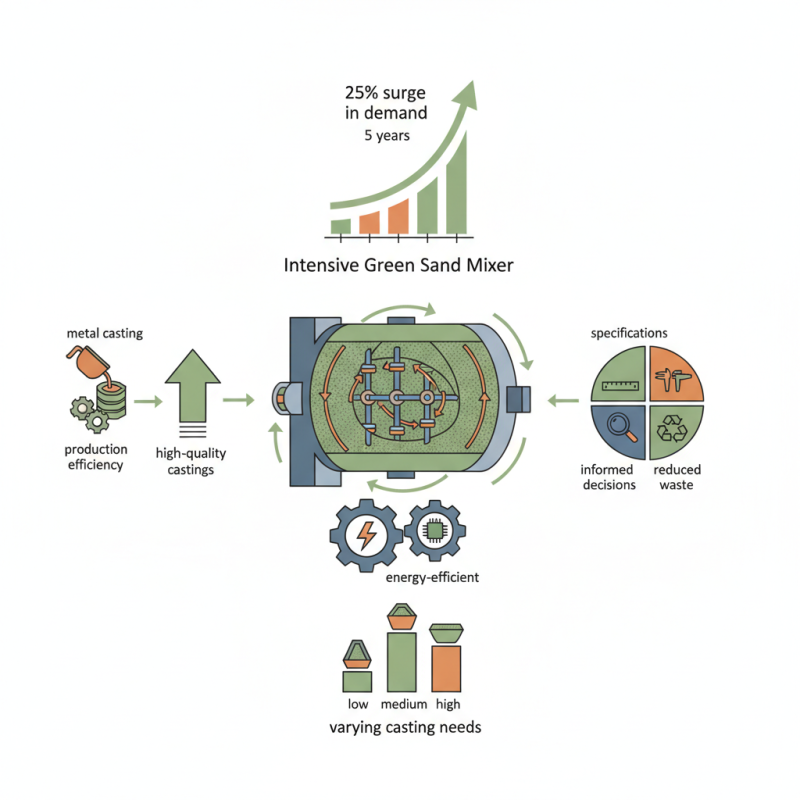
In the world of metal casting, the quality of molds significantly impacts production efficiency and final product quality. Intensive Green Sand Mixers play a crucial role in this process. These mixers ensure uniformity and consistency in sand preparation, critical for high-quality castings. According to a recent market analysis by Global Industry Analysts, the demand for efficient green sand mixers has surged by 25% in the last five years. This spike reflects the industry's shift towards high-performance, eco-friendly production methods.
Modern Intensive Green Sand Mixers incorporate advanced technology, enhancing mixing speeds and minimizing energy consumption. However, selecting the right mixer presents challenges. Not all mixers meet production demands or quality standards. Several manufacturers offer different features, making choice overwhelming. The need for better insights into mixer specifications and performance is evident. Industry reports indicate that improper mixing can lead to production defects, affecting overall operational efficiency.
Understanding the varying requirements of different casting processes is essential. Each application may require a unique mixer capability. The right choice can boost productivity and reduce waste. Therefore, evaluating mixers based on authoritative data can aid manufacturers in making informed decisions. This guide aims to provide expert insights into the best Intensive Green Sand Mixers suitable for diverse casting needs.
Overview of Green Sand Mixing in Casting Processes
Green sand mixing plays a vital role in casting processes. It involves combining sand, clay, and water to create a moldable mixture. Achieving the right consistency is crucial for ensuring the quality of molds. A well-mixed green sand allows for excellent detail reproduction in castings. However, many beginners struggle with the perfect mix. It's essential to recognize that the ideal sand mixture varies based on specific project requirements.
Tips: Always conduct small test batches before large-scale mixing. Adjusting the moisture content can significantly affect mold strength. Also, invest time in understanding the clay properties used in your mix.
The mixing process requires careful attention to detail. Too much water can lead to a weak mold, while too little can cause cracking. Regularly inspect your sand mixture for consistency. Experienced casters often employ trial and error to find the ideal mix, highlighting the importance of patience in this process. Mistakes are learning opportunities that can refine your techniques. By analyzing each batch, you can gradually improve your mixing skills and produce better outcomes.
Essential Features of Intensive Green Sand Mixers
When choosing an intensive green sand mixer, it's crucial to focus on key features. The mixing efficiency is paramount. A good mixer blends sand with binders uniformly. This ensures optimal mold strength and reduces defects in casting. Effective dust control mechanisms are also vital. They minimize airborne particles and contribute to a healthier work environment.
Durability should not be overlooked. Look for mixers that can withstand heavy-duty use. Quality construction materials lead to longevity, which is essential in an industrial setting. Additionally, the speed of the mixing process plays a critical role. Fast cycles enhance productivity but should not compromise the quality of the mix.
Maintenance features are important yet often neglected. Easy access to components for cleaning can save time and resources. Users should also consider the mixer’s adaptability to various sand types. Flexibility can significantly impact your operations. Regular assessments of mixer performance can reveal potential improvements. Keep an eye on wear and tear. These reflections can lead to better investment decisions.
Top Brands and Models of Intensive Green Sand Mixers
When selecting intensive green sand mixers, certain key models stand out in today's market. Industry reports indicate that efficient mixing quality is critical. A study found that around 75% of foundries prioritize high-quality sand mixing for improved casting performance. Key parameters include mixing time, uniformity, and moisture retention.
Leading brands focus on technology that ensures energy efficiency. A recent report highlighted that energy-efficient mixers can reduce operational costs by up to 20%. Newer models integrate automation, which can boost productivity but may come with a learning curve. Foundry operators need to balance innovation with usability.
User feedback plays a significant role in identifying the best options. Some mixers are noted for their quick maintenance and reliability, while some require more frequent servicing. Quality control remains a challenge. Operators need to share experiences to better understand which mixers truly meet their needs. This ongoing dialogue in the industry fosters improvements and innovations.
Top Intensive Green Sand Mixers Performance Comparison
Comparative Analysis of Mixer Performance and Efficiency
In the quest for the best intensive green sand mixers, understanding their performance is crucial. Comparative analyses reveal that mixer efficiency can significantly impact casting quality. Recent industry reports show that high-efficiency mixers can reduce sand preparation time by up to 30%. This acceleration can lead to faster production cycles, essential in competitive markets.
Mixer performance isn't solely about speed. Consistency in sand mixing is vital. Studies indicate that mixers achieving uniformity in grain distribution yield a 15% reduction in defects. Fluctuations in mix quality can lead to casting failures, costing businesses time and resources. Operators must ensure that maintenance protocols are in place to maximize mixer reliability.
Tip: Regularly inspect mixer components such as blades and seals. Wear and tear can affect performance.
Additionally, while high-capacity mixers stand out, their energy consumption is a concern. Some models consume 25% more energy than others, which affects operating costs. It's essential to consider overall efficiency over time rather than just initial output levels.
Tip: Analyze total operational costs, including maintenance, energy, and materials. This approach will enhance long-term sustainability.
Tips for Choosing the Right Green Sand Mixer for Your Needs
When selecting a green sand mixer, consider your specific casting requirements. The right mixer can greatly influence the quality and consistency of your molds.
One major tip is to assess the size and capacity of the mixer. If you have a small workshop, a compact model may be ideal. For larger productions, a high-capacity mixer could be essential. Always think about how much sand you'll need per batch. This step often requires deep reflection on your workflow and scaling needs.
Also, look at the mixing technology. Different mixers use varying methods, like batch mixing or continuous mixing. Each has its pros and cons. Consider your budget and the efficiency of the equipment. Some designs might seem cost-effective but could lead to frequent repairs, causing downtime. Always weigh the initial costs against long-term reliability and performance.