How to Choose the Right Food Machinery for Your Business Needs?
Choosing the right food machinery is crucial for any business in the food industry. It impacts production efficiency and product quality. Every operation is unique, and so are its needs. Understanding what type of food machinery fits your requirements can be a complex task.
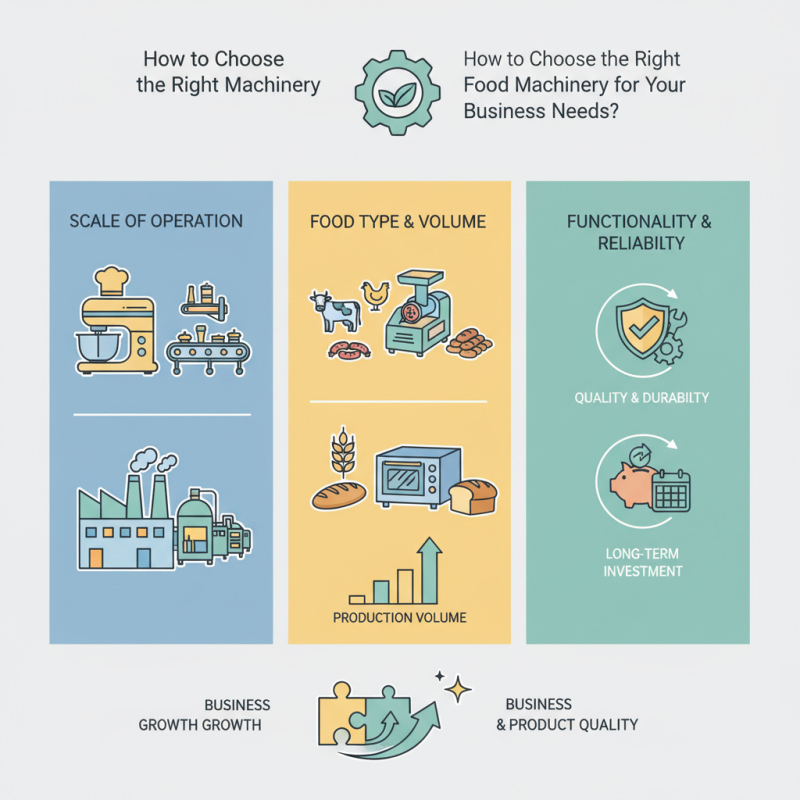
Consider the scale of your operation. Small businesses may not need large, industrial machines. They may only require compact, multifunctional equipment. Conversely, larger operations often need specialized, high-capacity machines. Evaluate your production volume and specific food types. Machinery designed for meat processing differs from that used for baked goods.
Functionality and reliability are pivotal. Researching brands is essential. It can be hard to decide which machinery will stand the test of time. Some companies may cut corners on quality, leading to costly repairs. When investing in food machinery, think about long-term benefits versus immediate costs. The right choice can drive growth and ensure consistent product quality.
Understanding Your Business Requirements for Food Machinery
When selecting food machinery for your business, understanding your specific needs is crucial. Start by assessing your production capacity. How much volume will you handle daily? This number will guide your choice. For instance, small businesses may benefit from compact machines, while larger operations need robust models. Consider the type of food products as well. Different processes require different equipment.
Next, think about efficiency. A machine that is too slow can hinder productivity. But be careful—speed shouldn’t compromise quality. Balancing these two factors can be tricky. Take some time to evaluate past performance metrics if available. Sometimes, machines that seem perfect on paper may not deliver as expected.
Don't ignore maintenance and operational costs. Some machinery requires frequent upkeep, which can add up. Others may be more reliable but come with higher upfront costs. Reflect on your budget carefully. Investing too little can lead to future expenses. Make a list of potential red flags to watch for during your evaluations. That could save you from costly mistakes down the line.
How to Choose the Right Food Machinery for Your Business Needs?
| Machinery Type |
Business Size |
Production Capacity (Units/Hour) |
Energy Efficiency Rating |
Price Range ($) |
| Mixing Machine |
Small |
100-200 |
A |
2000 - 3000 |
| Packing Machine |
Medium |
300-500 |
B |
5000 - 7000 |
| Filling Machine |
Large |
600-1000 |
A+ |
10000 - 15000 |
| Cutting Machine |
Medium |
200-300 |
A |
3000 - 5000 |
| Conveyor System |
Large |
500-800 |
A+ |
8000 - 12000 |
Identifying Key Features and Specifications of Food Equipment
When selecting food machinery, understanding key features is crucial. Look for equipment that suits your production volume. High-capacity machines work well for large operations. Smaller businesses may benefit from compact models. Don’t overlook energy efficiency. Machines that save energy can reduce costs over time.
Material quality is another vital aspect. Stainless steel offers durability and is easy to clean. This is essential in food production. Also, consider maintenance needs. Some machines require frequent servicing, which can disrupt operations. Evaluate if you have the resources for upkeep.
Lastly, think about user-friendliness. Complicated machines may slow down your workflow. Equipment should come with clear instructions. Training staff on new machines can be challenging. If the manual is unclear, it can lead to mistakes. Balancing features with simplicity is key in making the right choice.
Key Features of Food Machinery for Business Needs
Evaluating Production Capacity and Efficiency Needs
When choosing food machinery, understanding production capacity is critical. Many businesses underestimate their needs. Reports show that 40% of companies experience downtime due to insufficient capacity. Assessing the volume of products you need to produce daily helps avoid these issues. Aim for machines that can handle 10-20% more than your expected output. This buffer accommodates growth and unexpected demand surges.
Efficiency is another key factor. Research indicates that machines operating below 70% efficiency are not worth the investment. Regular maintenance is vital. Neglected machines can cause issues, leading to wasted resources. Businesses should regularly audit their machinery’s performance. Look for signs of wear or inefficiency.
Tips: Always start with a realistic assessment of your current and future needs. Consult with industry experts when in doubt. You may need to adjust machine specifications. Finding the right machinery is about balance. Sometimes, the most expensive option is not the best choice. Evaluate all aspects, including cost, to ensure you meet your production goals wisely.
Assessing Budget Constraints and Total Cost of Ownership
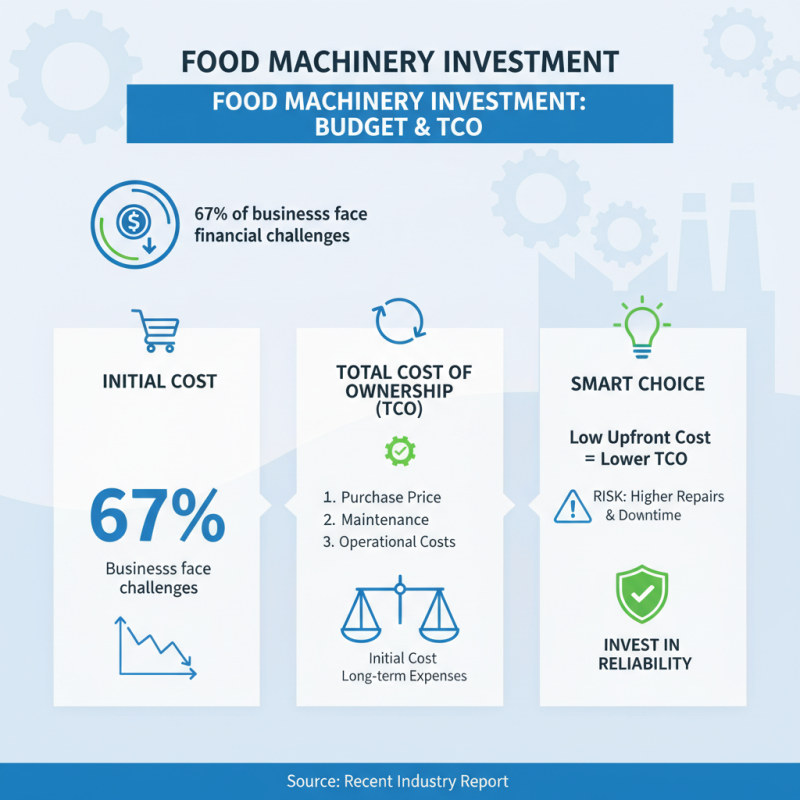
When selecting food machinery, budget constraints play a crucial role. According to a recent industry report, nearly 67% of businesses face financial challenges when investing in new equipment. Understanding the total cost of ownership (TCO) is essential. TCO includes initial purchase prices, maintenance, and operational costs over time. For example, a machine with a lower upfront cost may lead to higher repair expenses later.
It's important to consider the lifespan of the machinery. Each type has maintenance needs that can impact costs. A report indicated that preventive maintenance can reduce repair costs by up to 25%. Small food companies should evaluate whether they can afford ongoing expenses. A machine might seem affordable initially, but ongoing costs could surprise many operators down the line.
Training costs for staff must also be factored in. Businesses may overlook this aspect, leading to inefficiencies. Investing in specialized staff training improves machine use and decreases downtime. Another report highlighted that well-trained staff can enhance efficiency by 20%. Balancing these expenses effectively is fundamental for sustainable growth.
Researching Reliable Brands and Vendors in Food Machinery
When choosing food machinery for your business, research is crucial. Start by examining your specific needs. Different operations require distinct machines. Look for vendors with experience in the food industry. Their knowledge can help you make informed decisions.
Reliable brands often have positive reviews. Yet, don't solely rely on ratings. Visit trade shows or expos to see products firsthand. Engage with sales reps. Ask questions about warranties and service agreements. It’s essential to ensure their support after the purchase.
Even with thorough research, mistakes can happen. Sometimes, a machine may not fit your production goals as expected. Reflection on these choices is vital. Consider feedback from your team. They may have insights on efficiency or usability. This can guide future decisions, making your business even better.