Top 10 Tips for Choosing Food Factory Equipment?

When starting or upgrading a food production business, choosing the right food factory equipment is crucial. The right equipment impacts efficiency, safety, and product quality. Poor choices can lead to increased costs and operational inefficiencies. The food industry is highly competitive; having the proper tools can set you apart.

Every manufacturing process is unique. It requires equipment that suits specific needs. Investing in premium food factory equipment might seem tempting, but it’s essential to evaluate what you truly need. Not every brand will fit your business model. Make decisions based on thoughtful analysis rather than impulse. Rushing the selection might lead to regret later.

In this guide, we will explore ten important tips for making informed choices. These tips will help you avoid common pitfalls and maximize your investment. Choosing equipment is not just a task; it’s strategic. A well-thought-out approach will pave the way for success in the competitive food market.
Top 10 Tips for Choosing Food Factory Equipment?

Understanding Your Production Needs for Food Equipment

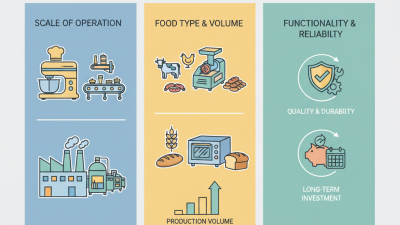
Understanding your production needs is crucial for selecting the right food factory equipment. Start by analyzing your product types. Different foods require specific processing methods. Consider whether you are handling solids, liquids, or both. This decision impacts machinery choices. Also, evaluate the production volume. High output demands different machinery compared to small-scale production.

Next, think about your facility layout. Space constraints can limit equipment options. You might find that larger machines fit well, but their efficiency is hindered in tight spaces. Maintenance is another aspect to consider. Some machines require regular upkeep that could disrupt production. Be ready to dedicate resources for this.

Labor skills should not be overlooked. Equipment that is too complex may require specialized training. Consider your team's capabilities. If they struggle with the machinery, that can slow down production. Reflect on current and future needs. Will your production goals change? Being adaptable is key in food manufacturing.

Top 10 Tips for Choosing Food Factory Equipment

Tip No. Tip Description Importance Recommended Equipment Type
1 Assess production capacity needs. High Mixers, Ovens
2 Evaluate space and layout requirements. Medium Conveyor Systems
3 Consider energy efficiency. High Coolers, Chillers
4 Check compliance with safety regulations. High Food Processors
5 Assess total cost of ownership. High Packaging Machines
6 Research maintenance and support options. Medium Blenders, Cutters
7 Consider scalability for future growth. Medium Industrial Mixers
8 Consult with employees for usability feedback. Medium Assembly Lines
9 Ensure equipment meets quality standards. High Quality Control Systems
10 Look for innovative technology solutions. Medium Automated Systems

Evaluating Equipment Materials and Durability Standards

Top 10 Tips for Choosing Food Factory Equipment?

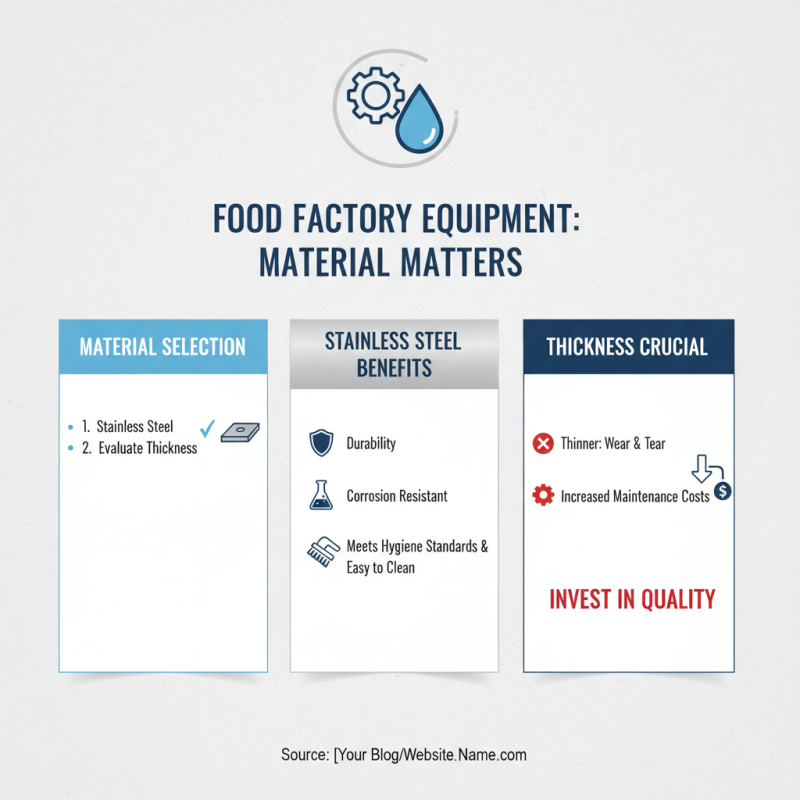
When selecting food factory equipment, material evaluation is crucial. Stainless steel is a common choice due to its durability and resistance to corrosion. It meets hygiene standards and is easy to clean. However, it's essential to consider the thickness of the steel. Thinner materials may not withstand wear and tear over time, leading to increased maintenance costs.

Durability standards are not just about the materials. They also include the design and construction of the equipment. Equipment designed for easy accessibility is better for maintenance. Regular checks are necessary to ensure everything operates smoothly. Additionally, look for equipment tested under various conditions. High-impact testing can reveal weaknesses not apparent in standard evaluations.

Choosing the right material and adhering to durability standards can feel overwhelming. It's easy to overlook minor details that can lead to issues later. For example, a decision made in haste could result in frequent breakdowns. Investing time in researching these factors pays off in the long run. Quality equipment can boost productivity and ensure safety in food processing.

Considering Compliance with Food Safety Regulations

Top 10 Tips for Choosing Food Factory Equipment?

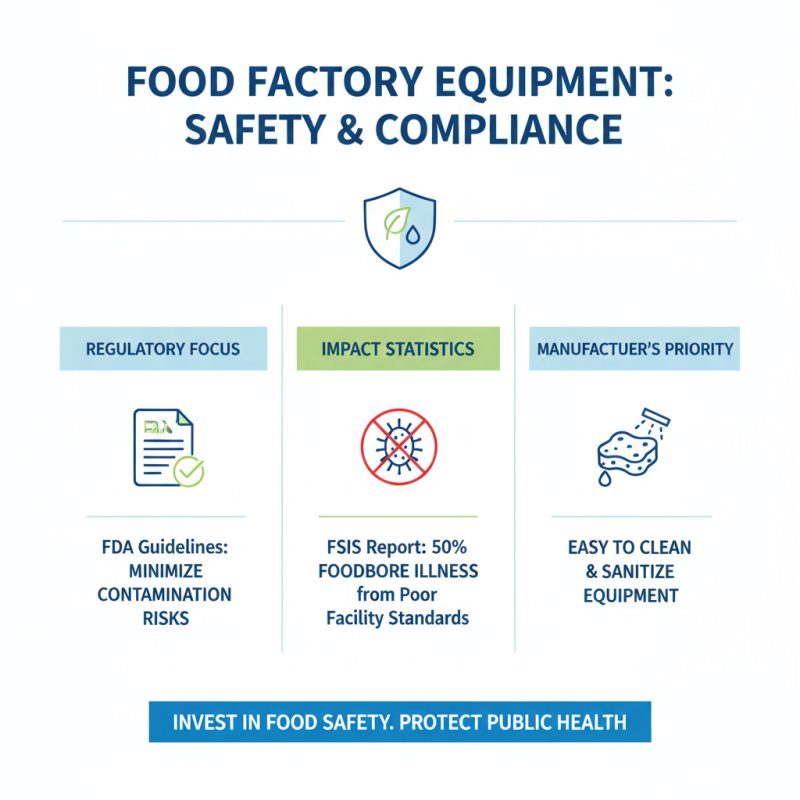
Choosing food factory equipment requires a thorough understanding of compliance with food safety regulations. The FDA emphasizes that equipment must minimize risks of contamination. A recent report by the Food Safety and Inspection Service highlights that nearly 50% of foodborne illnesses are linked to improper handling and inadequate facility standards. Manufacturers need to invest in equipment that is easy to clean and sanitize.

When selecting equipment, look for materials that comply with FDA standards. Stainless steel is often preferred due to its resilience and non-porous nature, which helps prevent bacterial growth. A study shows that 70% of food processors reported issues with equipment that was hard to maintain. This reflects the need for designs that consider both functionality and hygiene.

Ignoring the need for compliance can have severe consequences. A food recall can lead to significant financial loss and damage to a brand’s reputation. Many facilities overlook the importance of employee training related to equipment use. Training is critical. Companies need to ensure employees understand how to operate equipment safely while adhering to health regulations. The intersection of proper equipment and staff training is vital in maintaining a safe food processing environment.

Assessing Energy Efficiency and Sustainability of Equipment

When selecting food factory equipment, energy efficiency and sustainability should be top priorities. Efficient equipment can significantly reduce energy costs over time. Look for machinery that meets high efficiency standards. These often consume less electricity while performing optimally. It's crucial to understand the long-term benefits of this initial investment.

Sustainable practices also play an important role in equipment choice. Consider equipment designed for durability and low emissions. Reducing waste is another important factor. Equipment that minimizes by-products will support environmental goals. Analyze how equipment contributes to a sustainable production process. Many manufacturers claim to be ‘green’, but it’s essential to verify these claims.

Energy audits can offer insights into your equipment’s efficiency. Pay attention to maintenance needs as well. Equipment that requires frequent repairs may not be sustainable in the long run. Sometimes, cutting corners on energy-efficient choices can lead to greater expenses later. It's worth taking time to compare options. Balancing performance and sustainability is a challenge, but crucial for a responsible production line.

Analyzing Maintenance Requirements and Support Services

When choosing food factory equipment, maintenance requirements should be a key focus. Regular maintenance is essential to ensure smooth operations. Equipment that breaks down often can lead to significant production delays. You must assess the frequency of required maintenance. Understand what parts wear out quickly. Consider the accessibility of these components for repairs.

Support services play a critical role in equipment performance. Reliable support can save time and money. It’s important to evaluate the availability of technical assistance. Ask about response times for service requests. Some manufacturers may offer online support, while others have on-site teams. Be careful with vendors who promise quick fixes when problems arise.

Documentation regarding maintenance schedules is crucial. Clear guidelines can prevent operational issues. Some machines may require specialized training for staff. Reflect on the staffing needs before making decisions. Not every piece of equipment will fit perfectly into your existing workflow. Keeping this in mind can guide you towards better choices.