What is UVLED Flatbed Printing and How Does it Work?
UVLED Flatbed Printing is a revolutionary technology in the printing industry. It uses ultraviolet light to cure inks as they are printed. This process allows for high-quality images on various surfaces. From wood to glass, the versatility is impressive. The flatbed design supports larger materials, catering to diverse business needs.
One notable benefit is the quick drying time. Traditional printing often struggles with long wait times. However, UVLED technology delivers results instantly. This efficiency increases productivity for businesses. Yet, some may find the initial costs daunting. Investing in this technology requires careful consideration. The benefits often outweigh the challenges, making it a worthwhile option.
The vibrant colors produced can elevate product appeal. Businesses can create eye-catching displays and items. Nonetheless, mastering UVLED Flatbed Printing takes practice. It's not just about having the right machine. Skilled operators are essential for achieving the best results. Balancing speed with quality can lead to reflections on performance.
What is UVLED Flatbed Printing?
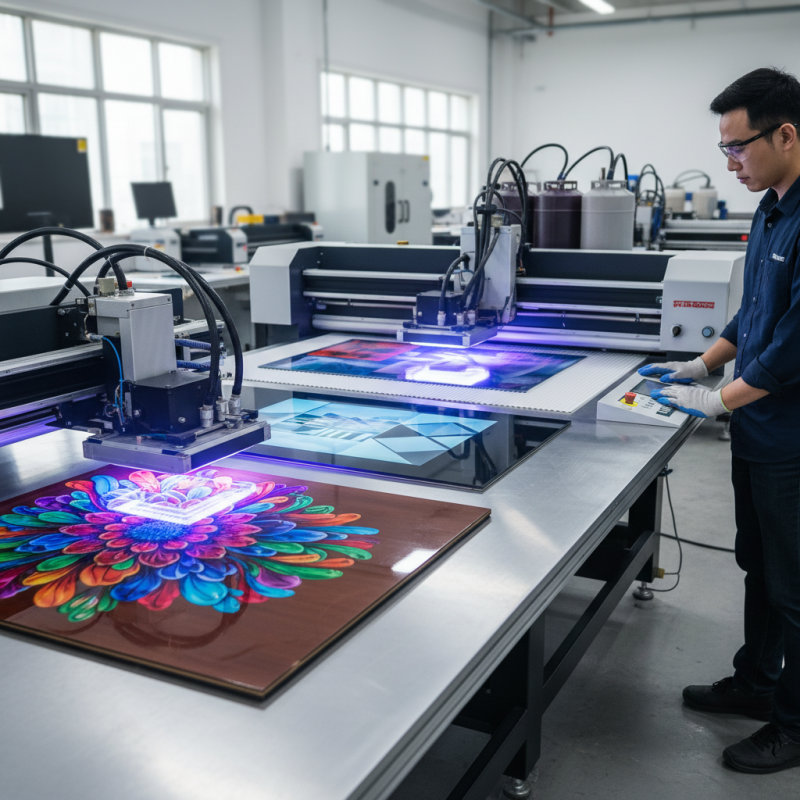
UVLED flatbed printing is an innovative technology that revolutionizes how we print on various surfaces. This method uses ultraviolet (UV) light to cure or dry ink as it is printed. The inks are specially formulated and contain photoinitiators. When exposed to UV light, these photoinitiators trigger a chemical reaction that solidifies the ink almost instantly. This results in sharp, vibrant images with excellent durability.
The flatbed design allows printing on rigid materials such as wood, metal, and glass. Unlike traditional printers, UVLED flatbed printers can print directly on these surfaces with precision. The versatility of this technology opens doors to a wide range of applications. Items like promotional displays, signage, and custom products benefit greatly. However, some users may find it challenging initially to get the settings just right.
One notable aspect of UVLED flatbed printing is its eco-friendliness. The inks emit fewer volatile organic compounds (VOCs), making it a more sustainable choice. Yet, achieving the best results sometimes requires trial and error. Factors such as ink adhesion and substrate compatibility can be tricky. Users must experiment to find the ideal combinations. Learning from these imperfections is part of the process. Embracing this can lead to improved outcomes and greater creativity in future projects.
The Technology Behind UVLED Flatbed Printers
UVLED flatbed printing technology represents a significant advancement in the printing industry. This method employs ultraviolet light-emitting diodes (LEDs) to cure ink as it is printed onto surfaces. Data from recent industry reports indicate that the global UV printing market is expected to grow at a CAGR of over 10% from 2023 to 2030. This growth is driven by the need for eco-friendly printing solutions and advanced applications across various sectors.
The technology operates by using UVLED lights to instantly dry the ink upon exposure. This results in vibrant colors and sharp details. Unlike traditional methods, UVLED printing can work on a diverse range of materials such as wood, metal, glass, and plastics. Notably, an estimated 35% of manufacturers now utilize UV printing, highlighting its rising popularity. However, while this technology offers speed and efficiency, challenges remain. Ink adhesion can be inconsistent on certain surfaces. Additionally, the initial investment for UVLED printers may be high. These factors demand careful consideration and planning by companies looking to adopt this innovative technology.
The Printing Process: Step-by-Step
UVLED flatbed printing has gained popularity due to its versatility and efficiency. The printing process involves several distinct steps that contribute to the final result. Initially, the flatbed printer is prepared by selecting the appropriate materials. This may include rigid substrates like wood, acrylic, or metal. Each material has unique characteristics that influence the ink adhesion and drying process.
Next, the UV ink is loaded into the printer. Unlike traditional inks, UV inks contain photoinitiators that cure quickly under ultraviolet light. During the printing phase, a print head moves across the substrate, depositing ink droplets. It’s a precise operation, but calibration can sometimes be tricky. Misalignment can lead to print defects that are hard to correct later on.
Once the ink is applied, the UV lights activate, curing the ink almost instantly. This step is crucial for achieving vibrant colors and sharp details. However, inconsistencies in curing can result in uneven finishes. Operators must maintain the equipment diligently to avoid these issues. The final result is a high-quality print, but every step requires careful monitoring and adjustment. Proper training and experience are vital to minimize mistakes in this dynamic process.
Applications of UVLED Flatbed Printing
UVLED flatbed printing has a range of applications in various industries. This technology excels in printing on rigid materials like wood, metal, and glass. It offers vibrant colors and high-resolution images. Many manufacturers use this method for creating signage, displays, and promotional materials. The ability to print directly onto the substrate reduces the need for additional processes.
Moreover, UVLED printing is embraced in the textile industry. It enables customized designs on fabrics, making it popular for fashion and décor. Artists also benefit from this technology, producing unique pieces that stand out. However, the initial investment can be high, which presents challenges for small businesses. Training staff to operate the equipment effectively is crucial yet often overlooked.
Sustainability is another concern. While UVLED printing is more eco-friendly than traditional methods, waste and energy consumption still deserve attention. The materials used can sometimes lead to suboptimal results. Continuous testing and adjustments are essential for achieving desired outcomes. In this fast-evolving market, adapting to new techniques remains a challenge for many.
Applications of UVLED Flatbed Printing
Advantages of Using UVLED Flatbed Printing Technology
UVLED flatbed printing technology offers several advantages that cater to diverse industries. This method allows for printing on various substrates, including wood, glass, and metal. The versatility is impressive. It enables high-resolution graphics that capture details vividly. Colors are vibrant and consistent, which enhances the appeal of any printed material.
One major benefit is the speed of production. UVLED printers cure ink almost instantly using ultraviolet light. This reduces the time spent on drying, leading to faster turnaround times for projects. Companies can meet tight deadlines more effectively. Furthermore, UVLED inks are eco-friendly, emitting minimal volatile organic compounds. This quality makes it a more sustainable option for businesses seeking to reduce their environmental impact.
However, not all outcomes are perfect. Some users report challenges in achieving consistent print quality across different materials. There may be a learning curve in mastering the settings for various substrates. This can lead to trial and error, which is frustrating. Adjusting parameters like temperature and pressure requires careful attention. Despite these hurdles, the benefits often outweigh the drawbacks for those willing to adapt and experiment.
What is UVLED Flatbed Printing and How Does it Work? - Advantages of Using UVLED Flatbed Printing Technology
| Feature | Description | Advantages |
| Print Quality | High-resolution images with precise details. | Produces vibrant colors and sharp images. |
| Speed | Fast printing process with minimal drying time. | Increases productivity and reduces turnaround time. |
| Material Compatibility | Can print on a variety of substrates like wood, glass, metal, and plastic. | Versatile usage across different industries. |
| Eco-Friendliness | Utilizes UV LED curing technology, which is more environmentally friendly. | Reduces VOC emissions and energy consumption. |
| Durability | Prints are resistant to scratching, water, and UV light. | Long-lasting prints with less fading over time. |